Smaller rooms, smarter tools: where the event industry is heading
The biggest events are not disappearing, but the energy has moved. Budgets, audiences and tools are all pushing the industry toward smaller gatherings, software that handles the admin, and design that starts with how a night should feel.
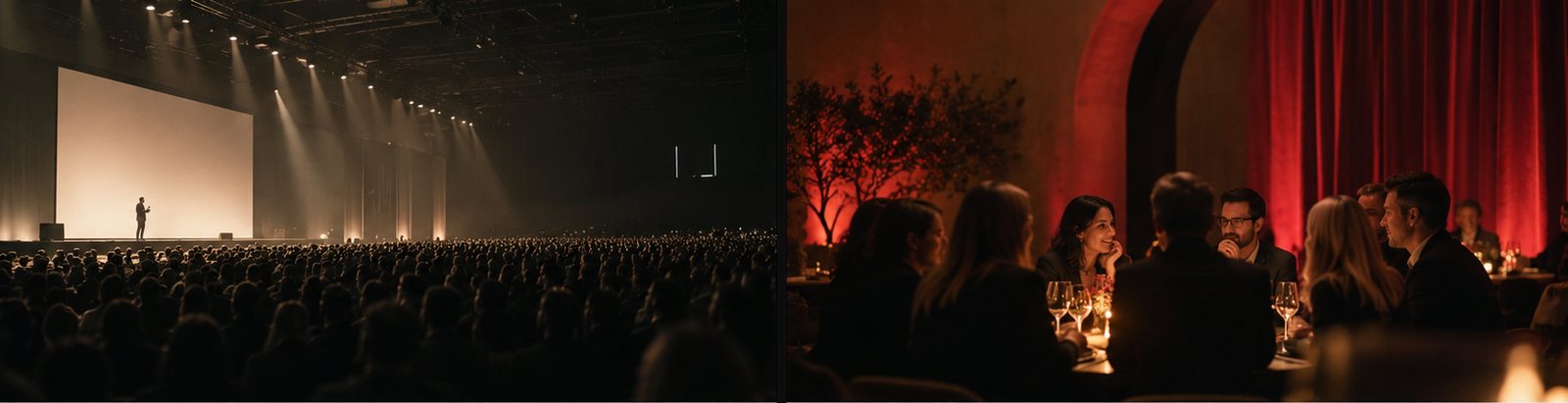
Smaller is a strategy, not a downgrade
Micro-events are usually described as gatherings of roughly 10 to 100 people, and some definitions stop at 50. The point is not size for its own sake. It is that a small room lets you design for a purpose, and lets every guest take part instead of watching.
The figures point the same way, with a caution: most come from event-technology vendors who have an interest in the trend. Forrester research from 2024 found 58% of events teams planning more small in-person events, under 200 people. Swoogo reported micro-events under 50 attendees growing 16% between 2023 and 2024, and found that companies investing in them were 15% more likely to reach 20% or higher yearly growth.
What replaces the single giant event is a portfolio. Many organizations now keep one flagship and run a series of smaller events through the year: roadshows, local meetups, dinners and workshops.
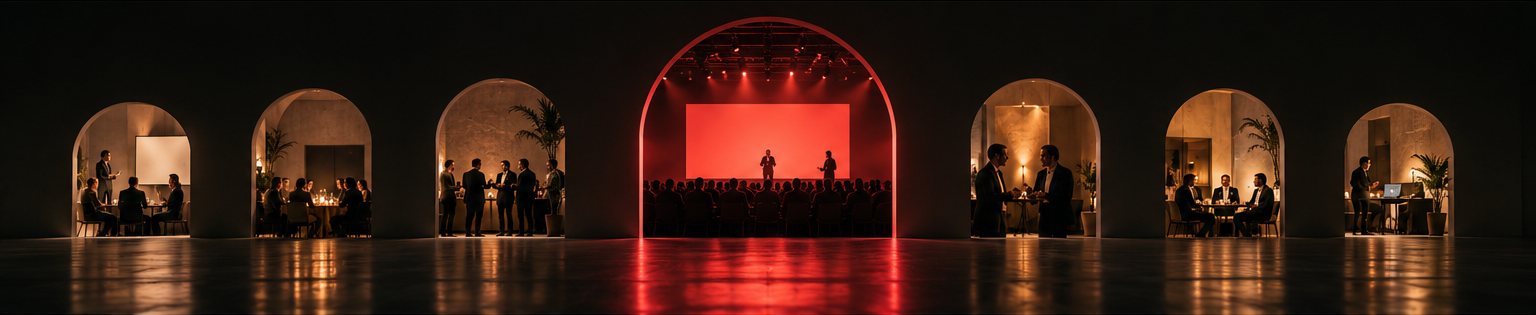
Why the shift is happening now
- Budgets. Large venues and heavy production cost a lot, and teams are asked to prove returns. Smaller events need smaller spaces and lighter setups.
- Audiences. Younger professionals want conversation, not spectacle. Smaller, more local formats suit them better.
- Measurement. Big events count registrations. Small ones can count depth: who talked, who followed up, who introduced someone.
- Fatigue. Travel cost and burnout make one huge annual trip harder to justify.
Industry voices are careful on one point. Mega-events are not dead. Small formats are forcing big ones to become sharper and more human, and organizers are building small, curated moments into large conferences too.
Mega, micro, or both?
Compare the formats.
- Size
- Thousands of attendees.
- What it costs
- Large venues, heavy production and long lead times.
- What success looks like
- Registrations, reach and headlines.
- Main risk
- Impersonal. Easy to attend and easy to forget.
- Size
- Roughly 10 to 100 guests.
- What it costs
- Smaller venue and lighter setup, but more events to run.
- What success looks like
- Depth of conversation, follow-ups and introductions.
- Main risk
- Treating smaller as safer and cutting the creativity.
- Size
- One flagship, plus a series through the year.
- What it costs
- The flagship budget stays. The series runs on repeatable formats.
- What success looks like
- The series keeps the audience warm. The flagship is the payoff.
- Main risk
- The series feels like leftovers if it is not designed to the same standard.
Practical AI: boring, useful, mostly invisible
The AI that matters in events is not a chatbot at the door. It is the software that removes admin, so a small team can run many small events without burning out. Event-technology firms expect organizers to move from planning single events to managing portfolios of them, and that only works if the repeated work is automated.
The useful rule is simple. Automate what guests never see, draft what needs a human voice, and keep people on everything that is felt.
Experience-first design
One warning from the industry is worth repeating. When brands shrink an event, they often treat smaller as safer and cut the creativity along with the cost. The opportunity is fewer touchpoints that are better designed. A private dinner for 20 or a workshop for 50 only works if every guest leaves with a reason to remember it.
Experience-first design means deciding in a fixed order. Start with the feeling you want guests to describe afterwards. Choose the one moment that carries it. Shape the space around that moment. Only then pick technology, and only what supports the first three.
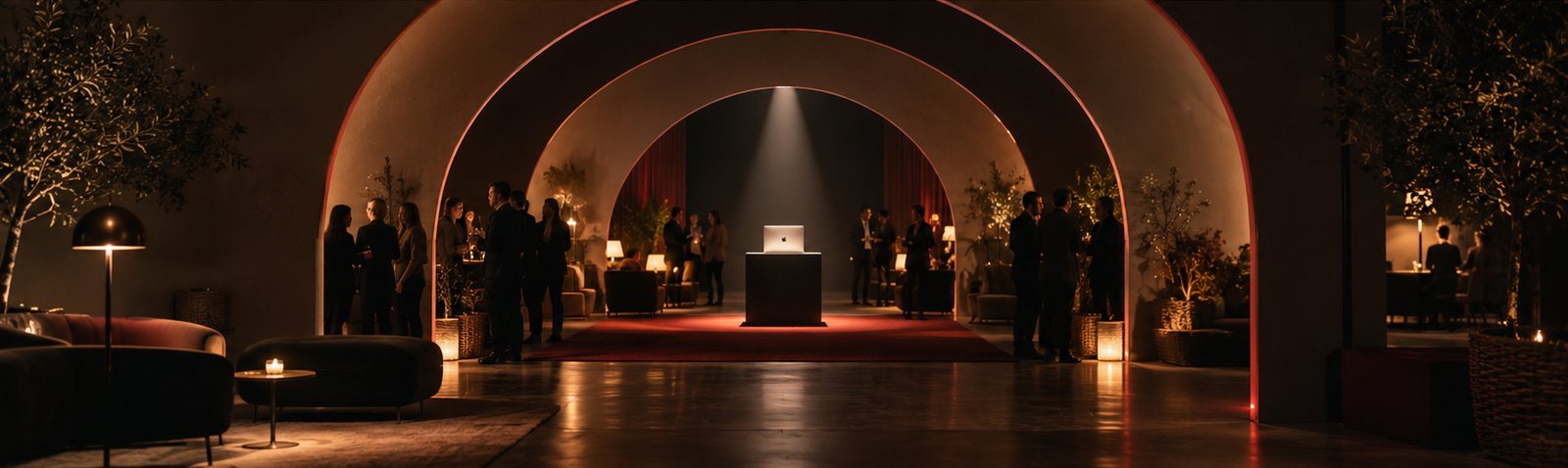
Which format fits your goal?
Pick a goal. Sizes are our suggestions, not rules.
An invite-only preview for 40 to 80 guests, repeated in two or three cities.
You get feedback and content in each room, and the second city is better than the first.
A recurring night or dinner for 30 to 100, with the same host and format each time.
People come back for the room, not the lineup. Consistency does the work.
A hosted dinner or workshop for 12 to 30 buyers.
Small enough that every guest has a real conversation with your team.
One pop-up or roadshow stop for 50 to 100 in a single city.
Learn what works before you commit to a flagship.
An evening for 20 to 40 of your best customers.
It feels personal because it is. Skip the booths and give them time with your team.
What mega-conferences can learn
The same thinking works at scale. Build small moments inside the big event: a hosted dinner for twenty, a hands-on session for fifty, a quiet room for people who want to talk. Guests then get the reach of a flagship and the attention of a small room.
Smaller is not safer. It is a chance to design every minute.
What to do next
- Pick one format and repeat it. A repeatable small event beats a one-off big one for learning.
- Automate the admin first. Invitations, RSVPs, reminders and reports.
- Design the feeling before you book anything.
- Decide how you will measure it. Depth of engagement, follow-ups and referrals, not only headcount.
- Keep the host visible. That is the part no tool replaces.
Sources: Forrester (2024) and Swoogo, as reported by Event Tech Live; RSVPify; Skift Meetings; Tagvenue; Lyyti. Several are event-technology vendors, so treat the figures as signals.
Want a smaller room designed properly? Talk to Börn.